Apple Might Finally Bring Back Small Phones With A Massive Twist
Rumors suggest Apple's first foldable iPhone could feature a tiny 5.25-inch outer screen, making it the smallest iPhone in years.
- neuralshyam
- 6 min read
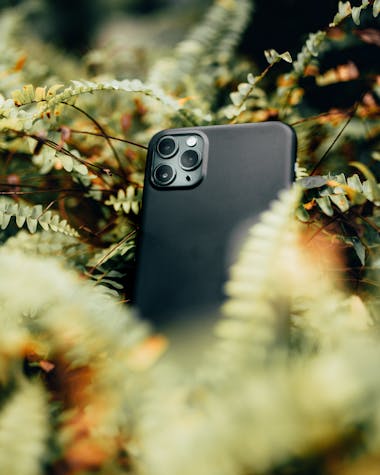
Let’s pour one out for the iPhone mini. Seriously, remember that little guy? It had a dedicated fanbase, but apparently, that fanbase wasn’t big enough to keep the production lines humming. The general consensus was that we all collectively decided we wanted cinema screens in our pockets. We voted with our wallets, and the verdict was: “Make it huge, make the battery last forever, and good luck to your pinky finger trying to hold it.”
But just when we thought the era of the one-handed phone was dead and buried, a spicy new rumor has popped up that suggests Apple might be pulling a fast one on us.
If the chatter is true, the upcoming foldable iPhone—which we probably won’t see until late 2026, so don’t pawn your iPhone 16 just yet—might technically be the smallest phone Apple has released in years. But here’s the kicker: it might also be the biggest.
The Return of the Pocket-Friendly Phone
So, here is the scoop coming from Digital Chat Station. If you aren’t glued to tech Twitter, these guys are usually pretty spot-on with their leaks (they nailed a bunch of iPhone 12 stuff way back when). They claim that Apple currently has a prototype sitting in a lab somewhere that features a 5.25-inch external screen.
Let that sink in for a second. 5.25 inches.
For context, the iPhone 13 mini—the one everyone said was “too small”—had a 5.4-inch screen. This rumored foldable would be even smaller than that when it’s snapped shut.
This is actually a huge deal for anyone who misses the days when you could text, scroll, and check notifications without needing to perform thumb gymnastics or use two hands just to reach the control center.
It’s also a bit of a departure from what the rest of the industry is doing. If you look at the Google Pixel Fold or the newer Oppos, their outer screens are usually hovering around 5.8 inches or bigger. The only time we really saw something this compact on a book-style foldable was the original Samsung Galaxy Fold, and let’s be honest, that thing looked like a remote control with its massive bezels. Assuming Apple trims the bezels (because, well, it’s Apple), we could be looking at a sleek, genuinely compact device that disappears into your pocket.
Magic on the Inside
Of course, nobody buys a foldable just to use the small screen. The whole point is the “Transformer” moment where you crack it open and suddenly have a tablet.
According to the same leak, the interior display on this prototype is clocking in at around 7.58 inches.
Is that massive? Not really. It’s actually a bit smaller than the 8-inch beasts we’re seeing from Samsung’s Z Fold 7 or the Google Pixel 9 Pro Fold. But honestly, 7.58 inches is plenty of real estate. It’s basically an iPad mini that you can fold in half.
This “Goldilocks” approach feels very Apple, doesn’t it? They rarely try to win the spec war on paper. Instead of giving us the biggest screen physically possible, they usually aim for a size that feels right in the hand. If they can nail the aspect ratio so apps don’t look weird and squashed, I don’t think anyone is going to complain about losing half an inch of diagonal screen space.
Please Don’t Be a Brick
Here is my biggest worry, and I think it’s a valid one for anyone who has handled a foldable phone. Thickness matters.
If this thing is just two iPhones stacked on top of each other, it’s going to be a hard pass for a lot of people. The beauty of the “Mini” form factor was that it was light and unobtrusive. A foldable needs to maintain that vibe.
We know Apple can make thin devices—the rumored “iPhone Air” and the impossibly thin iPad Pro are proof of that. But foldables are mechanically complex. You’ve got hinges, two screens, and batteries split between halves. If Apple releases a chonky brick that pulls your pants down, the novelty of the small screen will wear off pretty fast. It needs to be slim, sleek, and premium.
Camera Gambles and Missing Face ID?
This is where things get a little technical and slightly concerning. The leak mentions that the camera setup is going to be… interesting.
On the back, we’re likely looking at two 48-megapixel sensors. Probably a main lens and an ultrawide. Standard stuff. But on the inside? The rumor is that Apple is testing a “UPC”—an Under Panel Camera.
If you’ve used a Samsung Z Fold 3 or 4, you know that under-display cameras have historically been, well, potato quality. They’re great for hiding the lens so you get a full-screen experience, but they make your selfies look like they were taken on a webcam from 2006. Samsung actually ditched the UPC for a standard hole-punch in their newer models because the quality just wasn’t there.
If Apple goes this route, they better have some software wizardry up their sleeve to clean up the image, because “Shot on iPhone” has a reputation to uphold.
Also, say goodbye to Face ID on the foldable, apparently. The word on the street is that the sensors required for Face ID (the dot projector, infrared, etc.) are just too bulky to fit into a super-thin foldable bezel. Instead, we might see the return of Touch ID, likely embedded in the power button.
Honestly? I’m not even mad about that. Touch ID was reliable, fast, and didn’t care if I was wearing sunglasses or a mask. Bringing it back feels like a retro feature that actually fits the utility of a foldable.
The Elephant in the Room: The Price Tag
Let’s not kid ourselves. This is Apple we are talking about.
Competitors like the Samsung Galaxy Z Fold series are already hovering around the $1,800 to $2,000 mark. There is absolutely no universe where Apple comes in and undercuts them.
If this device launches in 2026, you should probably expect a price tag north of $2,000. It’s going to be positioned as an ultra-premium, luxury item. You’re paying for the engineering, the brand, and the flex of unfolding your phone at the dinner table.
The Verdict?
It’s easy to be skeptical. Foldables have been “the next big thing” for five years now, and while they are cool, they haven’t exactly replaced standard slab phones.
But if anyone can normalize a form factor, it’s Apple. By waiting until 2026, they are clearly letting Samsung and Google beta-test the technology for them. If they can solve the durability issues, keep it thin, and give us a truly usable small screen on the outside, this might be the device that finally convinces the average person to switch to a foldable.
Plus, for those of us who have been mourning the death of the small phone, this might be the only lifeline we have left. It just happens to come with a massive price tag and a hinge.
Start saving your pennies now, folks. Fall 2026 isn’t as far away as it seems.
- Tags:
- Foldable Tech
- Apple 2026